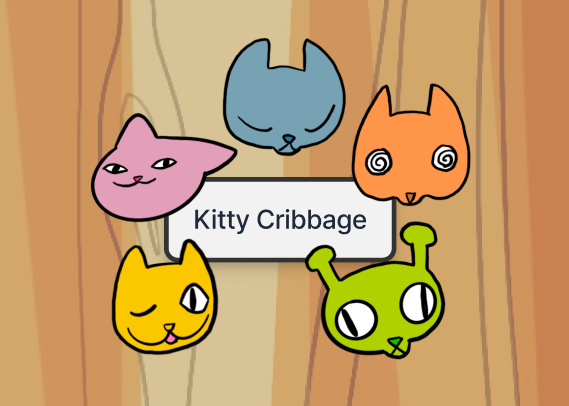
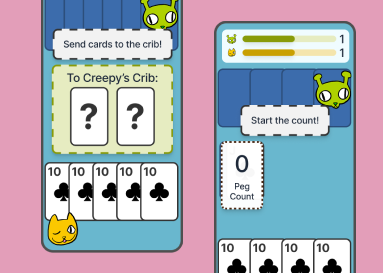
A self-initiated project to stress-test emerging genAI design tools while sharpening my mobile and game design instincts. I chose cribbage because I love the physical game — and added a cat character theme to give the project a distinct, ownable identity.
Process
I started with competitive research: downloaded the top 6 cribbage apps, played through each, and mapped gameplay flows and layout patterns to identify what worked and why.
From there, I built a design system aimed at feeling casual, charming, and legible — anchored by custom cat player icons. I sketched many directions, selected five favorites, and brought them to high fidelity first, since the characters would be the most memorable visual element.
Where it got interesting
My first attempt with Figma Make — prompting it cold to generate a cat-themed cribbage game — produced weak results. Feeding it my illustrations helped, but fine-tuning the UI felt clunky and costly. I needed a smarter approach.
The breakthrough was breaking the build into discrete gameplay stages, designing screens for each step first, then coaching the AI through them one section at a time. Locking off each stage before moving to the next prevented visual inconsistencies from compounding and kept the output aligned with my vision.
Result
8 hours. 31 versions. One playable, charming kitty cribbage prototype.
Takeaway
GenAI tools don't replace designers — but they dramatically compress the gap between idea and artifact. The output had imperfections a human engineer wouldn't have introduced, but the speed and fidelity of exploration made it worthwhile. I'm excited to use these tools alongside engineers to bring bigger ideas to life, faster.
You can play the game here